Tag: Review

  • WFA25: Novellas Review

    In the middle of July I set myself two reading challenges

    1. Read the British Fantasy Awards 2025 shortlist for Best Anthology
    2. Read the World Fantasy Awards 2025 shortlist for Best Novella

    The nominees for best anthology have had individual reviews, but I’ve decided to comment on the novellas as a group.

    As a reminder the nominees for World Fantasy Awards 2025 Novella are

    • Crypt of the Moon Spider by Nathan Ballingrud (Tor Nightfire/Titan Books)
    • In the Shadow of Their Dying by Michael F. Fletcher and Anna Smith Spark (Grimdark Magazine)
    • Yoke of Stars by R. B. Lemberg (Tachyon Publications)
    • The Woods All Black by Lee Mandelo (Tordotcom)
    • The Butcher of the Forest by Premee Mohamed (Tordotcom/Titan Books UK)
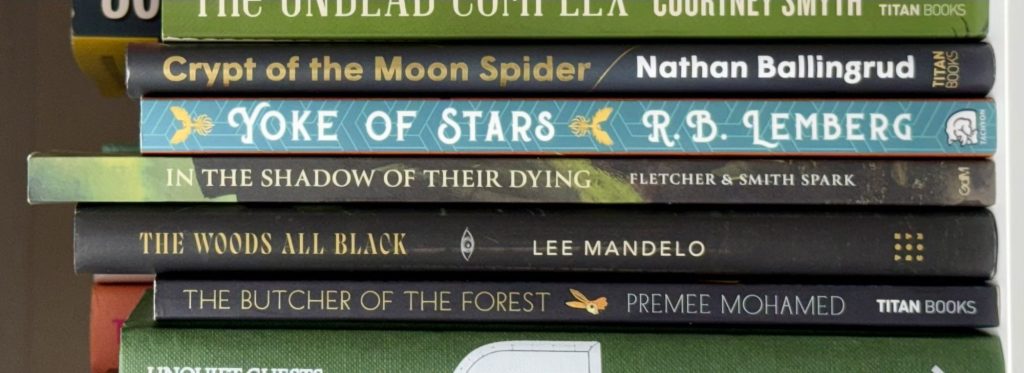
    A stack of the shortlisted novellas.

    Crypt of the Moon Spider by Nathan Ballingrud (Tor Nightfire/Titan Books)

    This is a re-read. I originally read this in November 2024 and enjoyed it. On the second reading, it felt more powerful. I was vaguely anticipating certain events, but I was convinced that I had also misremembered them. I hadn’t. It was more disturbing.

    The opening challenges you to suspend your disbelief. A woman is accompanied to the hospital by her husband for treatment of her affliction by hospital staff. So far, this is typical for a late nineteenth or early twentieth-century novel. However, this hospital is on the moon. It is also reported to be situated at the entrance to the burrow of a long-dead spider.

    What fascinates me about this story is Ballingrud’s exploration of memory and how reality can be reshaped through misremembering. There are spiders and body horror, but also themes of empowerment, rage, and revenge.

    I highly recommend this.

    In the Shadow of Their Dying by Michael F. Fletcher and Anna Smith Spark (Grimdark Magazine)

    An assignation attempt goes very wrong.

    There is no other way of saying this; I Did Not Finish this. I barely made it to the end of the second chapter.

    I also checked the ending to see if I’d been unkind or impulsive in my assessment. But I hadn’t.

    The opening had me hooked: following the third-best assassin in the city on a mission was quite thrilling. However, the voice, the point-of-view shift, and ultimately the story itself wasn’t for me.

    I’m sure it’ll have its fans. I am not one of them.

    Yoke of Stars by R. B. Lemberg (Tachyon Publications)

    A linguist has an interview with an assassin at the School of Assassins. Stonee Orphan greets the individual with their first assignment. As they try to understand who they are to kill, we gain insight into both the assassin and their client.

    Lemberg made me work. Since this was my first Birdverse story, I had to grasp the world being presented—a world of Stars and personified storylines: Song, Stone, Fish, Moss, Feeder, Boater, and Weaver.

    I’m curious how that lore is used, if at all, in other Birdverse works.

    The interview format allows the characters to swap stories, giving Stone, the assassin, and the reader insight into why Ulín, the linguist, wants someone killed. It also explores why Ulín is coy about stating it outright.

    It’s one of those stories that gets under your skin because it feels unfair. Ulín and Stone end up where they are because of what others see in them, not because of what they’ve built for themselves.

    Ultimately, it’s an exploration of story, gender, language, and understanding.

    Outstanding, and my winner (it was the actual winner too).

    The Woods All Black by Lee Mandelo (Tordotcom)

    A nurse volunteers to work in a small rural community in the Appalachian Mountains. There, she discovers she is unwelcome, despite the benefits her work could bring.

    This is a tough one. Billed as a blend of historical horror, trans romance and blood-soaked revenge, it certainly delivers all three.

    Mandelo handles the fluidity of pronouns used by the main character – a nurse sent to an Appalachian settlement – with ease. The romance becomes spicy, and the sense of dread remains palpable.

    Yet Mandelo’s story has some blind spots. At certain points, they create magical (and impossible) safety bubbles and pull back from fully exploring the truly horrific moments. I’m unsure whether this was a conscious or subconscious attempt to protect the characters – or the readers – from additional trauma.

    However, by holding back, some awkward moments arise where threats seem to vanish unnaturally. I also felt slightly short-changed by the lore surrounding the forest, which was only hinted at rather than fully explored or utilised.

    There is a lot to enjoy here, and it’s worth reading, but you may come away feeling slightly short-changed.

    The Butcher of the Forest by Premee Mohamed (Tordotcom/Titan Books UK)

    The children of the Tyrant vanish into a wood—a wood the locals know never to enter. The only person who has ever ventured into those woods and returned is sent in after them.

    Perhaps I’ve been reading too many stories set in dangerous, mythological forests—thanks to Heartwood: A Mythago Wood Anthology—but, as with The Woods All Black review above, I felt Mohamed held something back here and didn’t dig quite deep enough.

    Veris Thorn enters the woods with a knack (or folk instinct) for knowing the right or wrong way to proceed. There, she encounters tricksters, helpers, monsters, and impossible things. I liked Veris as a character—stoic and stalwart as she marched through the woods.

    But the set pieces didn’t add up for me. Should it have been grimmer? More fantastical? Perhaps the children should have been more damaged. Personally, I would have preferred it to be darker, more dangerous, and more unsettling.

    Again, as with The Woods All Black, I’m left wondering whether this was a deliberate or subconscious attempt to shield the readers—or perhaps the writer—from the trauma at the heart of the story.

    A sequel might well change my view, but for now, it’s a pleasant afternoon read—provided you don’t expect too much.


    The winner, Yoke of Stars by R. B. Lemberg, was announced on Sunday, 2 November, at the World Fantasy Convention in Brighton.

  • BFA25 Review: Fight Like A Girl 2 edited by Roz Clarke and Joanne Hall

    This is the third review from my challenge to read the 2025 British Fantasy Award Best Anthology category.

    In the introduction, Charlotte Bond writes:

    Whatever your taste, whatever you’re looking for, in these pages, you will learn one thing: how to fight like a girl.

    And I did — though I also found a few stories that weren’t to my taste, which is a shame. With fewer stories than the other anthologies I’ve read so far, the weaker ones stand out a little more — but never mind, there are still some standout tales here.

    K T Davies’s The Seamstress, the Hound, the Cook, and her Brother surprised me the most using a triptych to follow a crime through different eyes. Having seen the situation build from competing viewpoints, the shifting perspectives give the reader deeper insight into the final scene.

    Shifts in perspective are definitely a theme.

    One perspective I enjoyed — though I felt a little cheated by — was in A Human Response by Dolly Garland. Here a women’s body is replaced, and she finds herself trapped. Slowly, she pieces together what happens to her. The character is supposed to be without emotion, yet she has emotional reactions, which feels jarring. It also fades to black at a key moment in the ending, which I think robbed the character of the agency Garland had built up.

    In In More Trouble Than She’s Worth? by Cheryl Morgan, the narrator lacks agency, but her perspective offers some great observations. For example:

    I like the chrome in the sick bay, but am not convinced by the white. My crew have odd taste at times. I, by the way, am Sagaris, an Artemis Class cruiser of the Queen’s Amazon Navy, General Thomys commanding.

    And

    I got him though, didn’t I?, I thought proudly to myself. You can’t scrag a target without wobbling a few crew stomachs. A little non-fatal discomfort does the little ones good.

    In this tale, the crew picks up some very precious cargo. Morgan uses the situation to explore how women can be both mothers and fighters — and how that differs from their enemies. This one made me cry.

    The arrogance of men was explored by directly and successfully by both Gaie Sebold and Juliet E. McKenna.

    In Ambition’s Engine, Sebold takes us to high society, where a newly appointed Chief Defender of the Dominion’s Transport hatches a plan to get more from a train ride than he was commissioned for. Sebold packs in commentary about war, colonialism, and the arrogance of powerful men.

    With Civil War, McKenna examines the impact of a change in monarch when the King has no male heir. She explores the options available to the court and the guilds. This was a like watching a royal game of chess and I didn’t see final the move until it was too late. Very cleverly done.

    In the introduction Roz Clarke and Joanne Hall suggest:

    ‘…perhaps now we can look beyond a direct kick back against the idea that women can’t fight, and start to reintegrate more traditionally acceptable forms of feminine power with that warrior archetype.’

    And they’ve proved with this collection that fighting and feminine power take many forms — from the bloody, to the subtle, to the fearless — with motivations that defy the ‘warrior archetype’.

    If you don’t need convincing that women can fight, this collection is for you. There are some excellent stories here.

    And if you do need some persuasion, this collection is also for you — though you might end up a little more paranoid than before, as not all fights are direct confrontations or fairly fought.

    Anthology Details

    Title: Fight Like a Girl – Volume 2
    Editors: Roz Clarke, Joanne Hall
    Publisher: Wizard’s Tower Press
    Publication Date: Autumn 2024
    ISBN (Paperback): 9781913892845
    ISBN (EPUB): 9781913892852
    ISBN (MOBI): 9781913892869
    Format: Paperback, EPUB, MOBI

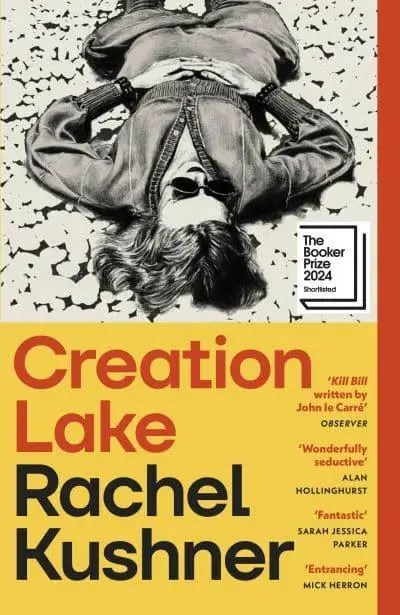
  • SR Review: Creation Lake by Rachel Kushner [2024]

    Second (or Spoiler) Read Reviews are written for readers who already know about a book or don’t mind a spoiler or three. Expect plot reveals and in-depth discussion of the book’s events.

    Cover of Creation Lake by Rachel  Kushner

    WARNING. SPOILERS FROM THIS POINT ON 

    My interest in reading Creation Lake was sparked by a mistaken categorisation of it as science fiction. It’s not. It is, however, science-infused fiction.

    That’s one of the things that kept me going—the main character and first-person narrator’s paraphrasing of various emails focused on Neanderthals and Homo sapiens, which were also supposed to contain hidden messages about the intentions of an activist group she was sent to spy on.

    I should have put it down when the email summaries stopped; without them, it lost its magic. It felt like there was a moment when the author realised she needed to do something with all these vibes and start planning for an ending.

    I can see why it made it to The Booker Prize 2024 shortlist. It lingers. It lingers. I imagine it would spark a great book club discussion.

    The character repeatedly tells us she’s an agent provocateur—and not a good one. In the end, the incident she’s meant to instigate would have happened without her, which makes it all feel a little pointless. Actually, that’s unfair. She does whip up the crowd, forcing the target to be in the wrong place at the right time.

    There’s no grand conspiracy. There’s commentary on wealthy people playing saviour to those their peers have oppressed and ignored. There’s also a lot of information imparted about evolution.

    It’s like a weird fever dream of a secret agent’s summer holiday—one that both we and the author eventually wake up from. It’s one I feel I’d rather not have had.

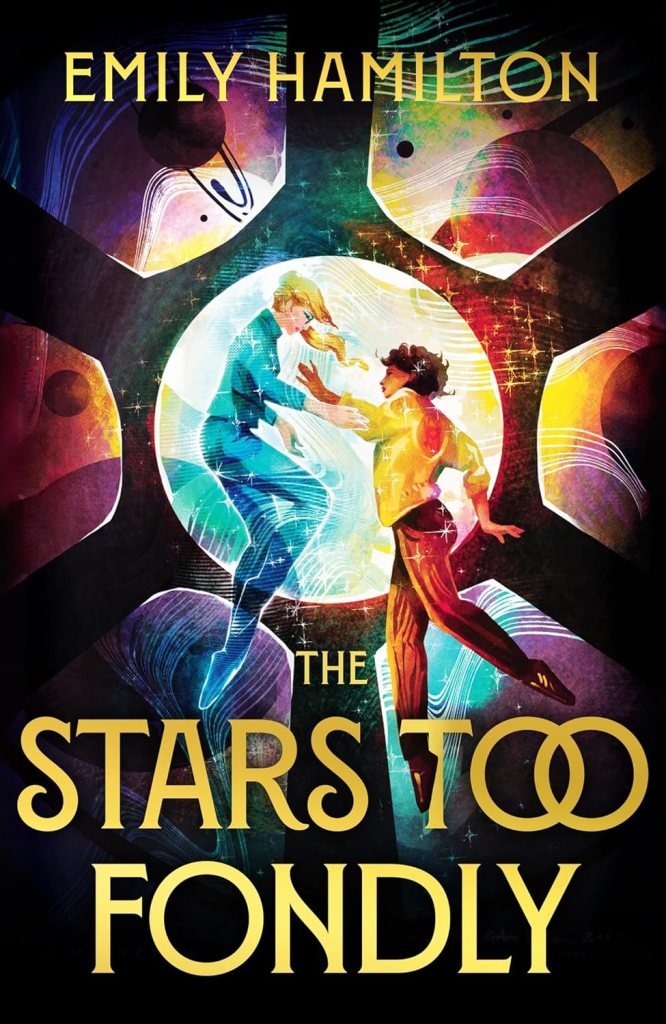
  • FR Review of The Stars Too Fondly by Emily Hamilton [2024]

    First Read Reviews (FR Reviews) are written for readers who want to know whether a book is worth picking up and what it might be about. There may be mild spoilers, but no in-depth discussion of the book’s events.

    The publishers describe The Stars Too Fondly as:

    “Part space odyssey, part Sapphic romcom, and all spaceship-stealing fun, Emily Hamilton’s breathtaking debut is a wild tale of galaxy-spanning friendship, improbable love, and wonder as vast as the universe itself.”

    After finishing it last night, I mostly agree.

    Hamilton weaves a well-constructed story of strange energy, making the best of bad circumstances, and unsustainable love.

    I can’t remember why I bought it—maybe I just needed more fun, space-based sci-fi. I read it now because June was Pride Month, and I was hoping for some queer joy. That’s exactly what Emily Hamilton delivered.

    Four friends want to know what happened to the missing crew of a spaceship, so they break into a compound to find out. In the process, they set off a series of events that lead them to examine the fabric of the universe in a completely unique way.

    At its core, The Stars Too Fondly is a slow-burn sapphic romance. It’s essential not only to understanding the main character but also to a foundational element of the plot. The story couldn’t have happened without it.

    As this is a First Read Review, I won’t overexplain the story. I found it compelling and touching—it made me cry—but it also had a strong sci-fi heart. The science drives the events until… well, you’ll see.

    Hamilton keeps it playful, especially in the interplay between the long-term friends and the not-so-subtle flirting of the wannabe lovers. The characters come to understand the impact of being on an unplanned space odyssey, and Hamilton manages the tension so it never spills over into melodrama.

    I do have a couple of notes of caution. First, in the setup, you’ll need to suspend disbelief that an advanced spacecraft could remain untouched in a hangar for twenty-one years. Second, the story is stripped back, which is part of its appeal—you, as the reader, are as trapped as the characters. Some may find this overly simplistic or frustrating. But as I said, it’s all about the romance and finding out whether they will or won’t. No spoilers, but I cried again.

    The spice level was unexpected, given the timing and circumstances in which it occurred. And the resolution to one of the plotlines felt underplayed, considering all it took to get there.

    But Hamilton clearly planned her plot. You can see the threads come together, and that makes her a writer to watch.

    Overall, I had a great time. If you’re looking for queer joy in space with solid science fiction adventure behind it, I highly recommend this book.

  • Review: Alien: The Cold Forge by Alex White

    Alien: The Cold Forge by Alex White

    I read the complete Salvagers Trilogy (A Big Ship at the Edge of the Universe/A Bad Deal for the Whole Galaxy/The Worst of All Possible Worlds) by Alex White last year.

    I also read my first Aliens tie-in novel (Alien 3: The Unproduced Screenplay from William Gibson by Pat Cadigan)

    And as I enjoyed both separately, I thought I’d combine the author and franchise in the form of my next Alien book. 

    [Spoiler]I was so gripped by this Alien story that, whilst reading it, I hunted down a great deal on a seven-book-set of other Alien tie-ins. Then when I fished The Cold Forge I ordered  Alien: Into Charybdis, which continues the story in some way. [/Spoiler}

    The Cold Forge starts when a callous auditor from Weyland-Yutani is sent to a secret space lab to assess the profitability of the various research projects on board. It ends with shock and horror. 

    I wasn’t expecting how much horror White weaved in. Their style for this story is dark. They managed to build a tension that made me want to know what could happen next to the scientists.

    The reader knows how dangerous the xenomorphs can be even if the scientists think they are safely caged up, but what becomes clear is that the Aliens aren’t the only thing to fear. 

    You can tell White is enjoying themselves. They go deep. There is no sugarcoating here. They also made a disabled character one of their main focuses. I wish more books would include disabled rep and make the characters part of the ordinary course of the story. 

    I am excited to read the post-2014 batch of Alien novels from Tim Lennon, James A. More, Christopher Moore, Keith DeCandido, Tim Waggoner, and others. White has set a high bar to reach. 

    Rating 4.5/5