Spoilers: None
Genre: Paranormal Mystery / Urban Fantasy Detective
Format: Paperback
Source: Bought
Rating: Liked (4★)
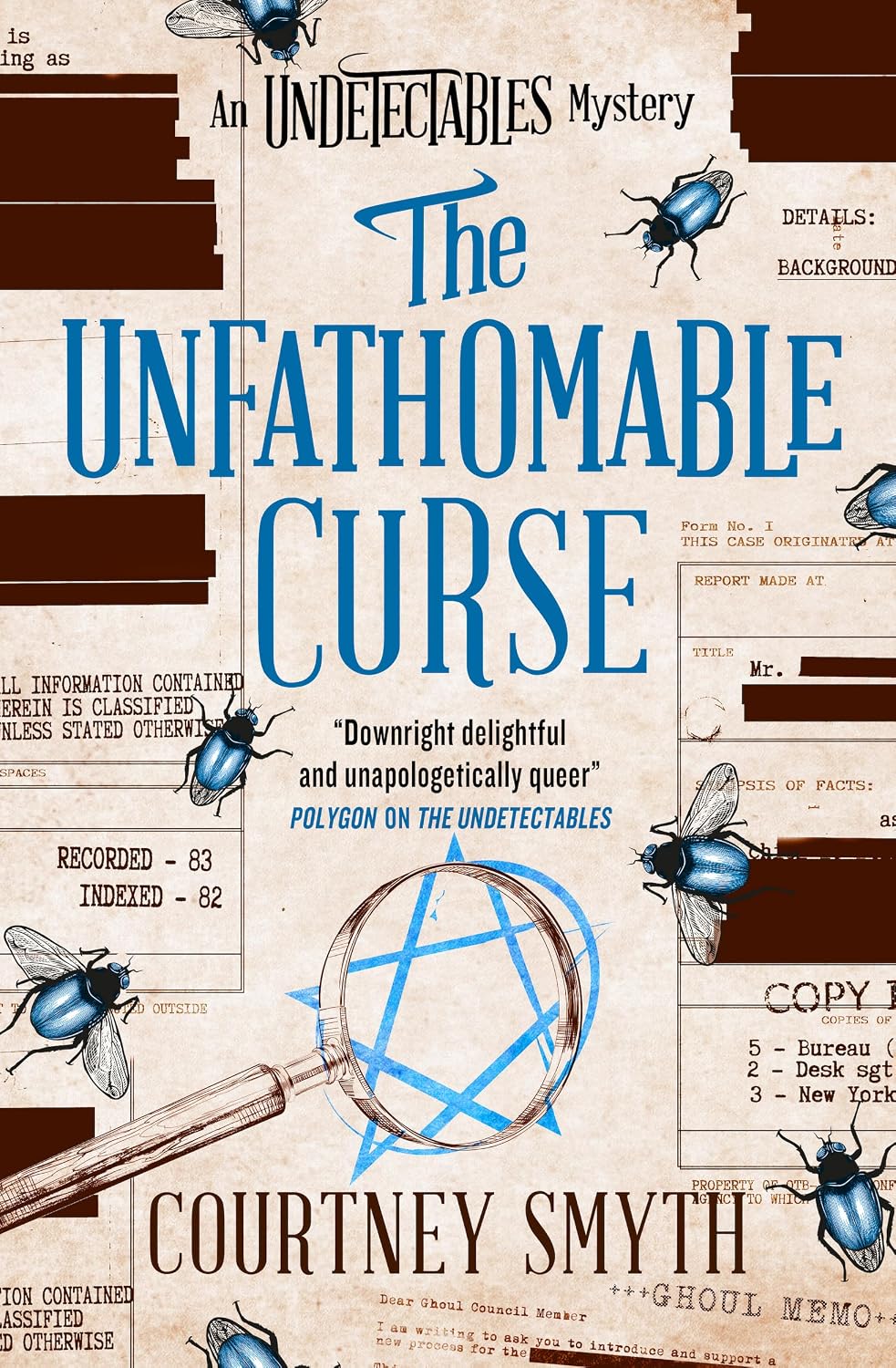
Smyth is growing as a writer with each book, and The Unfathomable Curse is the best in the series so far.
In this instalment, The Undetectables detective agency faces its most personal case yet, and they are on the clock to solve it before a fatal deadline.
Will they solve the mystery in time, or will they be left with more questions and corpses?
That depends on whether they can get the Ghoul Council to react without first holding a meeting about it.
From the opening pages, Smyth is whisking the characters between gravesites, witness interviews, and stakeouts, while coping with a still-not-right Theo and running two investigations.
What is brilliant is that this book focuses on Cornelia. I was a bit miffed reading the last one because Smyth moved Mallory away from the centre of attention and made Diana the main focus.
Though this didn’t occur to me until I was a good chunk in, I now see that each book gives one of them their moment in the spotlight. I can see this choice means the reader gets to know and understand each of them better by getting into their heads. I want to go back and re-read the earlier books now that I know Cornelia better.
Now I understand why this is a four-book series.
It’s one of those books where it’s better not to think too deeply about the structure of the world-building.
For example, the Ghoul Council burying itself in paperwork rather than addressing the crisis directly explains why Cornelia’s relationship with her family is the way it is (her parents head the council) and helps move the plot along by their inaction, so the detectives can investigate without their help. I can understand why Smyth chose to do this, but it can feel off because they seem constrained by the plot rather than by their own behaviour.
The only other issue is that sometimes scenes with the main characters turn into isolated bubbles where the side characters are forgotten. There are moments where the other people in the scene should be having quite a strong response to what has just been revealed to them.
For example, late in the book, actions have been taken that I would demand be repaired, but no one demands anything, and no one talks about it. Instead, those other characters just seem to vanish from the conversation and the scene itself – to be fair, I might have missed the description of it happening, but it shouldn’t have been a throwaway line if it was mentioned.
Given this book’s ending and Theo’s behaviour throughout, the final instalment will almost certainly focus on his thoughts, feelings, and motivations.
It’s one of those books where you get towards the end and wonder why you’ve got so many pages left. It’s because Smyth has more surprises to spring. The revelations are well thought out and presented in surprising and shocking ways.
The ideas introduced here also cast the earlier mysteries in a new, disturbing light.
My love for Mallory, Diana, and Cornelia is only getting stronger. Though I wonder if I’ll ever like Theo again.
If you, too, were captivated by the lives of Mallory, Diana and Cornelia and enjoy seeing them work a case, then you’re going to enjoy this.
I have no idea what the final book will reveal. Smyth has put many pieces in play by seeding them throughout the books. I predict I’ll be pleasantly shocked by what the 4th and final book, The Unsolvable Case, reveals.
Rating Scale: Loved/Inducted (Personal Canon, 4.5-5★) • Liked/Passing Through (Not Quite Canon, 3.75-4.25★) • Impactful but Flawed/Missed Swings (2.75-3.5★) • Reshelved (Soft DNF) • Not for Me (1-2.5★ or Hard DNF)