Spoilers: None
Genre: Portal Fantasy / Survival Fantasy
Format Read: ebook
Disclosure: None [this book was purchased by me]
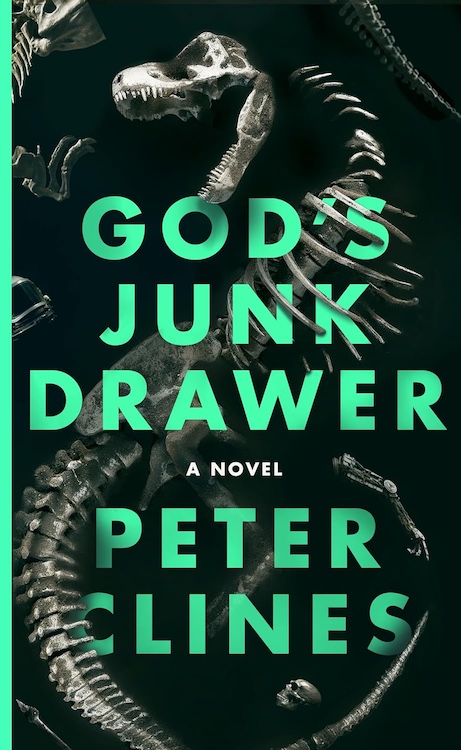
God’s Junk Drawer is the story of a child, Billy Gather, who, along with his sister, Beau, and father, goes missing during a rafting trip and ends up in a valley with dinosaurs, aliens, Neanderthals, and androids. It isn’t as silly as you’d expect. Clines takes it seriously, and because of that, it’s more emotionally resonant than I could have imagined.
Rating: 4.5★ / 5
I liked it, I think. Let me explain.
I’ve stepped back from reviewing for a while because I felt a bit of an imbalance. The analytical side of my brain — the part that holds the book in a buffer in my mind and runs analysis on it — had, I think, started to take away from the feelings that make reading enjoyable, the joy that my more emotive side gets from a book.
This might explain why I’ve been enjoying books that give a strong emotional response, even when I can see ‘flaws’ that my more logical side would normally have focused on and criticised the book for. God’s Junk Drawer is exactly the kind of book that benefits from that shift — one that hits the emotional notes even if the logic sometimes feels like unwelcome static.
It opens with clippings about a missing boy who is suddenly found, and he claims he’s been to a fantastical valley full of dinosaurs. In the present, the now‑adult Billy (Noah) has figured out a way to return there — but not without accidentally taking a group of graduate astronomy students and their guide with him, none of whom, unlike Noah, had prepared for the trip.
Once that happens, it becomes clear why Clines has chosen to alternate points of view (PoV). Jumping from head to head is probably my least favourite storytelling technique. Here, though, it feels essential: a group of people experiencing the fantastical from different perspectives, with no preparation, alongside one adult who was certain the valley hadn’t changed.
There’s a childhood naivety mixed with a teenage arrogance to Noah — he insists he knows everything there is to know about the valley — but he’s proven wrong pretty quickly. Not only about the current landscape, but about the nature of the valley itself. Clines does an exceptional job of keeping me guessing, and even as we reach the climax, he still has one or two surprises left to reveal.
It’s a very open‑minded work, and it plays a lot with the histories of its characters. One pair in particular has an ‘aha’ moment that reframes why they hate each other so much — a reveal that lands with real emotional weight.
It’s also a very brutal book — not just because the valley is dangerous, but because Clines is telling a story with real impact, rather than one that prioritises emotional safety.
Now that I’ve sat with it a bit, thinking about what the valley is and its history, I do like it. I’d recommend resisting the urge to understand the valley early on; Clines reveals its nature gradually, setting things up only to pull back a curtain and show something else. Even then, I think there are still a few gaps I’d have appreciated more insight on.
Overall, I really liked how Clines shows Noah that what his teenage self remembered was not reality, and that the sacrifices he’d made to get back had a far wider impact — both positive and negative — than he’d selfishly assumed.
If you want to experience a valley with dinosaurs, consider your own survival odds, and have your assumptions happily eroded, I’d recommend it.
Note: I rate on a four-tier scale: Loved (4.5–5★), Liked (3.75–4.25★), Mixed (2.75–3.5★), and Not for me (1–2.5★).

