Spoilers: None
Genre: Literary Fiction
Format read: Print
Disclosure: None [this book was purchased by me]
Loved (4.5–5★)
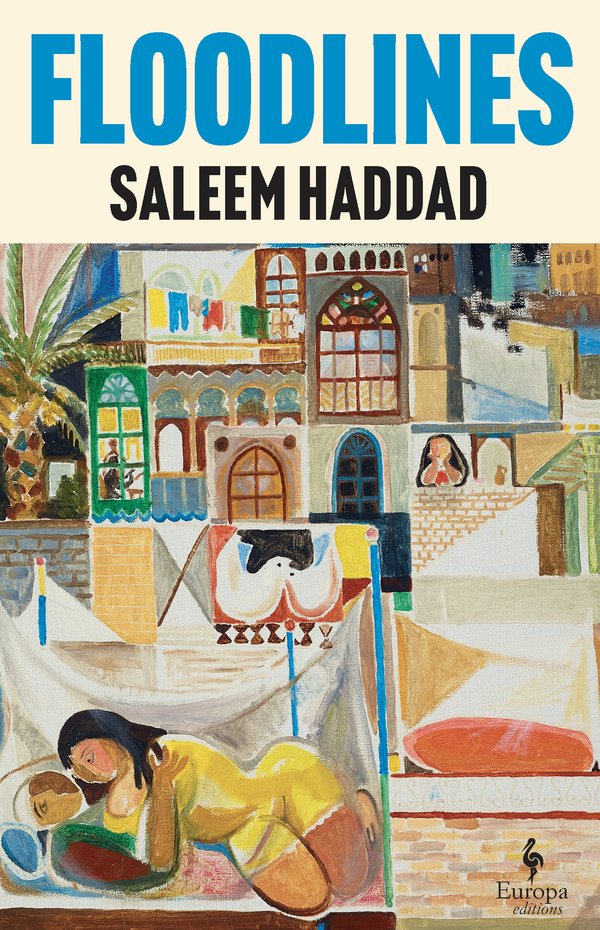
This is Haddad’s second novel. His first, Guapa, won the Polari First Book Prize and was set over 24 hours during the Arab Spring. Floodlines starts in July 2014 and ends in November 2014, but it documents events that happened decades earlier, and they ripple through its pages.
Haddad shows us that dreams play a significant role in the trajectory of our lives. He presents us with characters who are happier when the past is forgotten and buried in the sand, and contrasts them with those whose childhood nostalgia is so powerful it demands their shared past be uncovered. A past cleaned up and carried aloft with pride, like a tarnished family heirloom of uncertain value.
As the story progresses, some of the characters’ imagined pasts are shown to be untethered from reality. These conflicting memories explosively converge by the end of the novel. They often take the form of a waking dream, in which past events in Iraq intrude on the reality of their English country-cottage family home. Hopes for the future—a future where those displaced by the wars in Iraq are able to go home and re-find their identities—are harshly exposed as fantasy. But the reality is that a swept-away past has been left to fester.
On its surface, this is a story of three sisters who are arguing over how to honour or preserve their father’s artistic legacy. Their father was a hero in Iraq, still revered as a great artist, and is remembered for the impact he had. But the plan to track down his art and exhibit it unravels the past that has been tightly bound and hidden away.
There is an early email exchange in which Zainab states to Mediha, “I am copying in Ishtar because all three of us, as Hayder’s daughters, should be involved in these discussions.” However, this exchange later boils over with the reply, “Your concern for Baba’s legacy is laughable. What is driving all this sudden love and adoration?”
Haddad weaves a tapestry using the points of view of a son (Nizar, a war journalist turned sex worker), his mother (Zainab), her two sisters (Ishtar, the middle sister, and Mediha, the youngest and carer to their mother), and their mother (Bridget). Each point of view is a loose thread that the characters and the story tug on, as the lies their lives were built on unravel.
Art does not heal the trauma, and exposing the realities through factual reporting doesn’t either. The act of creation and observation does, however, expose the inner self. For example, Zainab collects objects and creates handicrafts and is seen as a lesser artist, while Ishtar has turned her art into political protest but is now beating a drum that only she can hear.
Lies sit at the heart of the novel because they are used to sweep away the truth. It is a story of dreams and quests, but also of the realities of displacement, and of how setting the past aside in favour of the present does not remove its burdens.
Though the story opens with Nizar, it is ultimately a family story. Haddad centres each of them, and some of the most powerful moments come when Bridget’s past and present merge. In these skilfully described scenes, you wonder if you are in a country home in the UK or standing in a house in Iraq. By the end, you know their mother has moulded them, but their history, and the desert heat, have fired them.
Floodlines asks: What does their father’s art reveal? And is that knowledge worth it?
The answer challenges taboos and conformity, exposing the lies we tell others and ourselves to feel safe. Ultimately, it serves as a warning that art is the heart revealed.

