Spoilers: None
Genre: Weird/Cosmic Horror
Format: Hardback
Source: Bought
Rating: Inducted (4.5–5★, Recommended)
What if something was eating your memories? You were also aware that it was happening but didn’t know what it had taken, or what you were doing to stop it, because it wasn’t just your memories it was taking, but everyone else’s too? And what if it wasn’t just one thing but lots of ‘things’ that could affect people’s memories? Then what would you do?
We are used to ideas (memes) breaking containment.
…an internet meme is a concept or piece of media that spreads via the internet. It could be anything – a video, hashtag or image…They can come from social interactions, pop culture, or political views.
Source: MEMES: WHAT ARE THEY?
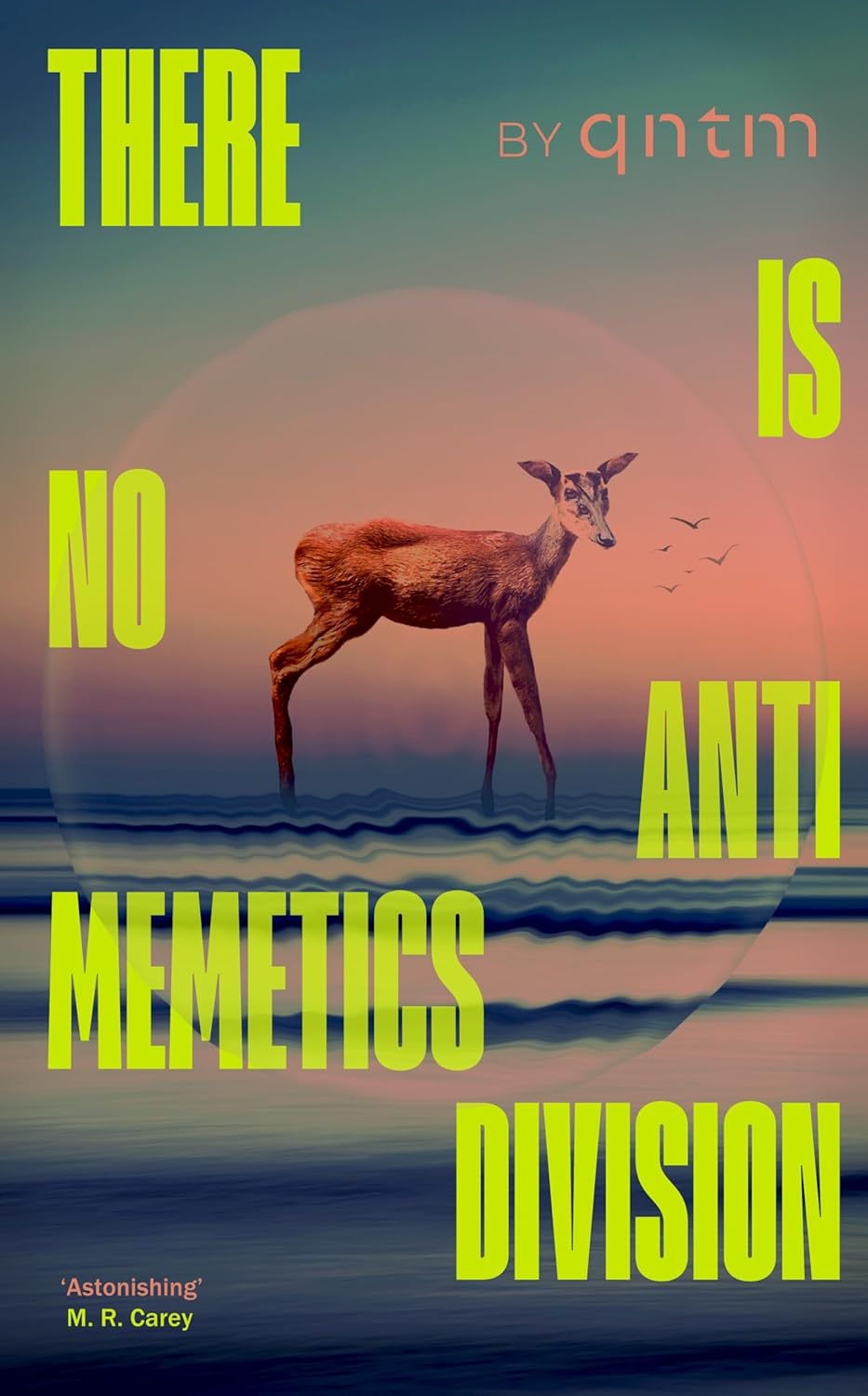
Memes change the world, and anti-memes do too. qntm’s There Is No Antimemetics Division explores what happens when ideas don’t spread, but instead resist being remembered and slip from the mind.
An antimeme is an idea with self-censoring properties; an idea which, by its intrinsic nature, discourages or prevents people from spreading it.
It opens with Marie Quinn walking into a meeting that feels wrong, and from there, everything feels out of place.
qntm takes the weirdness of VanderMeer’s Area X novels, combines it with the government bureaucracy of Stross’s The Laundry series, and puts it in a pressure cooker, releasing the results in a series of intense, interlinked sections.
As a novel that plays with memory, it has its own logic, but it also has jarring moments. It takes what you’ve been told from earlier scenes and twists and changes them, which doesn’t automatically mean you’ve misremembered them.
It originated as a web serial, and I wonder if that’s why it occasionally feels fragmented. Whether the fragmentation is accidental or deliberate, they add to the uncertainty and enhances the creeping horror signposted throughout.
As a reader, I don’t think you’re expected to ‘keep’ up with the changes, but you do need to accept that the reality you now see is the one in that moment.
Cosmic horror is, at its heart, about the uncaring nature of the universe and the entities who are bigger than us, but qntm makes this personal for Quinn, and by extension, the reader. Quinn is perhaps cruelly given back memories she’d lost, only to have them taken away again.
This is a clever novel; it may frustrate and infuriate, but it builds toward a moment via the mantra:
No, this is not your first day.
Recommended for readers interested in the 2026 Arthur C. Clarke Award shortlist and for fans of Jeff VanderMeer, Charles Stross, and creeping existential horror.

